
Merchandise Description
Created in China Flat Face Dust Plug Hydraulic Hose Fast Coupling
Technicial sheet of hydraulic hose fittings:
| Merchandise Identify | Steel content higher force hydraulic fitting for rubber hose |
| Material | carbon steel,stainless metal,brass,aluminium,and so on… |
| Treatment | Cr6free Zinc, Nickel, chrome,portray,etc… |
| Thread | Metric,BSP,JIC,DIN,JIS,etc… |
| Link | feminine and male |
| Approach | CNC machining based mostly on solid component or bar uncooked substance |
| Code NO. | DKOL,DKOS,ORFS,CEL,and many others… |
| Used | precision elements, machinery components, truck and automobile parts, industrial areas,mining add-ons, off-shore appliances, agricultral amenities, and construction substance, etc… |
Solution Introduction:
one.Substance:
Material of Female Socket: Zinc- Chromate plated Metal
Material of Male Plug: Zinc- Chromate plated Metal
two. Edge: Crucial Elements are hardened for toughness.
Poppet valves are offered to prevent uncoupled leakage.
Poppet valves open immediately when coupled within rated operating force to maintain the circulation expeditely.
three. Dimensions: NPT 1/4, 3/8, 1/2, 3/4, 1. It really is Okay to purchase Female Socket and Male Plug jointly or seperately.
4. Common: ISO7241-1 Collection A
Interchangeable with:
PARKER 6600 series
Quicker ANV series
AEROQUIP 5600 collection
HANSEN HA 15000 series
What is actually Incorporated:
* Female Coupler
* Male Coupler
Primary Content and Collection:
Carbon steel,Brass, Stainless metal 304/316
ISO 7241A Collection ,ISO 7241B Collection ,FLAT Confront COUPLING
Our Support: We can crimp hose assembly for our buyers
Application:
Mainly utilised for design products, hydraulic machinery, oil euipment and other hydraulic purposes.
FAQ:
Standard packaging: carton, can be personalized in accordance to buyer demands
Transportation: specific, sea and air freight are support
Supply Time:
1.If we have inventory,we’ll send out out to you in a 7 days
two. Normally, it will consider about twenty days. The specific delivery date will be negotiated in accordance to your buy.
MOQ:a hundred
(If the quantity you need is considerably less than one hundred pieces, please come to feel free of charge to make an inquiry with us. If we have stock, you can also
buy.)
Payment:LC/TT
our payment usual is T/T ,L/C ,if you want other payment , remember to inform us
|
US $0.5-15 / Piece | |
500 Pieces (Min. Order) |
###
| Certification: | ISO9001 |
|---|---|
| Pressure: | High Pressure |
| Work Temperature: | High Temperature |
| Thread Type: | Internal Thread |
| Installation: | Crimp Type |
| Material: | Carbon Steel |
###
| Customization: |
Available
|
|---|
###
| Product Name | Steel material high pressure hydraulic fitting for rubber hose |
| Material | carbon steel,stainless steel,brass,aluminium,etc… |
| Treatment | Cr6free Zinc, Nickel, chrome,painting,etc… |
| Thread | Metric,BSP,JIC,DIN,JIS,etc… |
| Connection | female and male |
| Process | CNC machining based on forged part or bar raw material |
| Code NO. | DKOL,DKOS,ORFS,CEL,etc… |
| Used | precision parts, machinery accessories, truck and auto parts, industrial parts,mining accessories, off-shore appliances, agricultral facilities, and construction material, etc… |
|
US $0.5-15 / Piece | |
500 Pieces (Min. Order) |
###
| Certification: | ISO9001 |
|---|---|
| Pressure: | High Pressure |
| Work Temperature: | High Temperature |
| Thread Type: | Internal Thread |
| Installation: | Crimp Type |
| Material: | Carbon Steel |
###
| Customization: |
Available
|
|---|
###
| Product Name | Steel material high pressure hydraulic fitting for rubber hose |
| Material | carbon steel,stainless steel,brass,aluminium,etc… |
| Treatment | Cr6free Zinc, Nickel, chrome,painting,etc… |
| Thread | Metric,BSP,JIC,DIN,JIS,etc… |
| Connection | female and male |
| Process | CNC machining based on forged part or bar raw material |
| Code NO. | DKOL,DKOS,ORFS,CEL,etc… |
| Used | precision parts, machinery accessories, truck and auto parts, industrial parts,mining accessories, off-shore appliances, agricultral facilities, and construction material, etc… |
Functions and Modifications of Couplings
A coupling is a mechanical device that connects two shafts and transmits power. Its main purpose is to join two rotating pieces of equipment together, and it can also be used to allow some end movement or misalignment. There are many different types of couplings, each serving a specific purpose.
Functions
Functions of coupling are useful tools to study the dynamical interaction of systems. These functions have a wide range of applications, ranging from electrochemical processes to climate processes. The research being conducted on these functions is highly interdisciplinary, and experts from different fields are contributing to this issue. As such, this issue will be of interest to scientists and engineers in many fields, including electrical engineering, physics, and mathematics.
To ensure the proper coupling of data, coupling software must perform many essential functions. These include time interpolation and timing, and data exchange between the appropriate nodes. It should also guarantee that the time step of each model is divisible by the data exchange interval. This will ensure that the data exchange occurs at the proper times.
In addition to transferring power, couplings are also used in machinery. In general, couplings are used to join two rotating pieces. However, they can also have other functions, including compensating for misalignment, dampening axial motion, and absorbing shock. These functions determine the coupling type required.
The coupling strength can also be varied. For example, the strength of the coupling can change from negative to positive. This can affect the mode splitting width. Additionally, coupling strength is affected by fabrication imperfections. The strength of coupling can be controlled with laser non-thermal oxidation and water micro-infiltration, but these methods have limitations and are not reversible. Thus, the precise control of coupling strength remains a major challenge.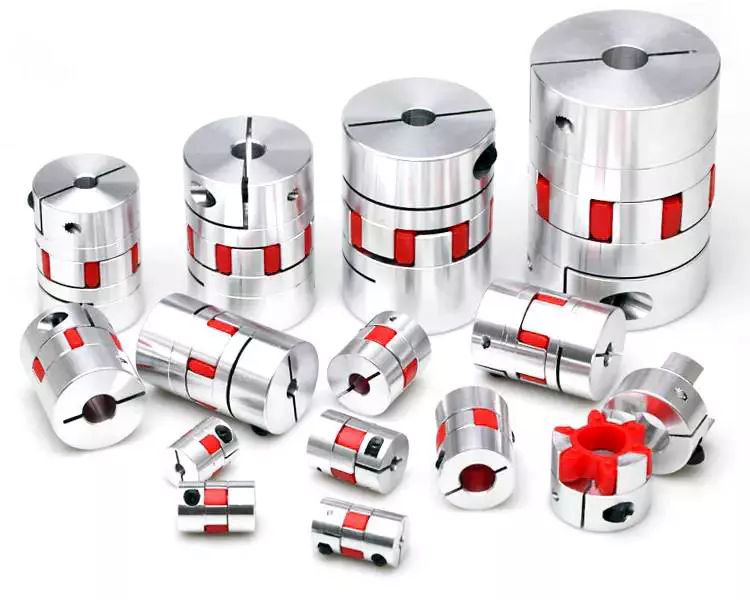
Applications
Couplings transmit power from a driver to the driven piece of equipment. The driver can be an electric motor, steam turbine, gearbox, fan, or pump. A coupling is often the weak link in a pump assembly, but replacing it is less expensive than replacing a sheared shaft.
Coupling functions have wide applications, including biomedical and electrical engineering. In this book, we review some of the most important developments and applications of coupling functions in these fields. We also discuss the future of the field and the implications of these discoveries. This is a comprehensive review of recent advances in coupling functions, and will help guide future research.
Adaptable couplings are another type of coupling. They are made up of a male and female spline in a polymeric material. They can be mounted using traditional keys, keyways, or taper bushings. For applications that require reversal, however, keyless couplings are preferable. Consider your process speed, maximum load capacity, and torque when choosing an adaptable coupling.
Coupling reactions are also used to make pharmaceutical products. These chemical reactions usually involve the joining of two chemical species. In most cases, a metal catalyst is used. The Ullmann reaction, for instance, is an important example of a hetero-coupling reaction. This reaction involves an organic halide with an organometallic compound. The result is a compound with the general formula R-M-R. Another important coupling reaction involves the Suzuki coupling, which unites two chemical species.
In engineering, couplings are mechanical devices that connect two shafts. Couplings are important because they enable the power to be transmitted from one end to the other without allowing a shaft to separate during operation. They also reduce maintenance time. Proper selection, installation, and maintenance, will reduce the amount of time needed to repair a coupling.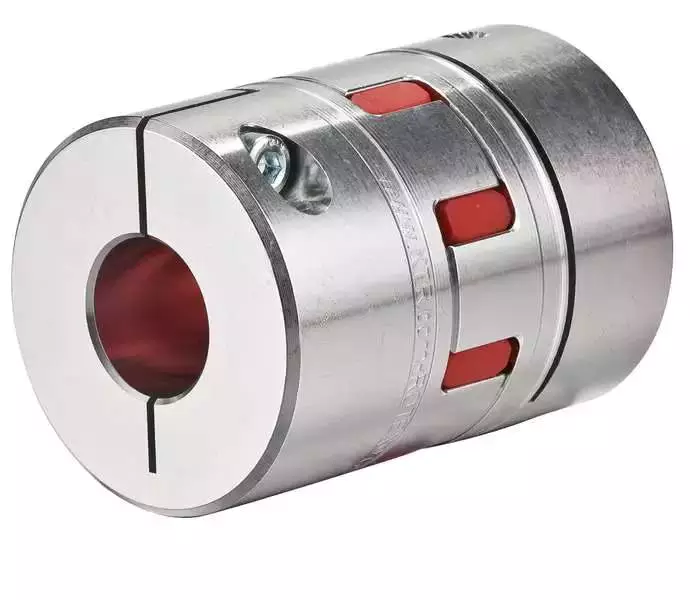
Maintenance
Maintenance of couplings is an important part of the lifecycle of your equipment. It’s important to ensure proper alignment and lubrication to keep them running smoothly. Inspecting your equipment for signs of wear can help you identify problems before they cause downtime. For instance, improper alignment can lead to uneven wear of the coupling’s hubs and grids. It can also cause the coupling to bind when you rotate the shaft manually. Proper maintenance will extend the life of your coupling.
Couplings should be inspected frequently and thoroughly. Inspections should go beyond alignment checks to identify problems and recommend appropriate repairs or replacements. Proper lubrication is important to protect the coupling from damage and can be easily identified using thermography or vibration analysis. In addition to lubrication, a coupling that lacks lubrication may require gaskets or sealing rings.
Proper maintenance of couplings will extend the life of the coupling by minimizing the likelihood of breakdowns. Proper maintenance will help you save money and time on repairs. A well-maintained coupling can be a valuable asset for your equipment and can increase productivity. By following the recommendations provided by your manufacturer, you can make sure your equipment is operating at peak performance.
Proper alignment and maintenance are critical for flexible couplings. Proper coupling alignment will maximize the life of your equipment. If you have a poorly aligned coupling, it may cause other components to fail. In some cases, this could result in costly downtime and increased costs for the company.
Proper maintenance of couplings should be done regularly to minimize costs and prevent downtime. Performing periodic inspections and lubrication will help you keep your equipment in top working order. In addition to the alignment and lubrication, you should also inspect the inside components for wear and alignment issues. If your coupling’s lubrication is not sufficient, it may lead to hardening and cracking. In addition, it’s possible to develop leaks that could cause damage.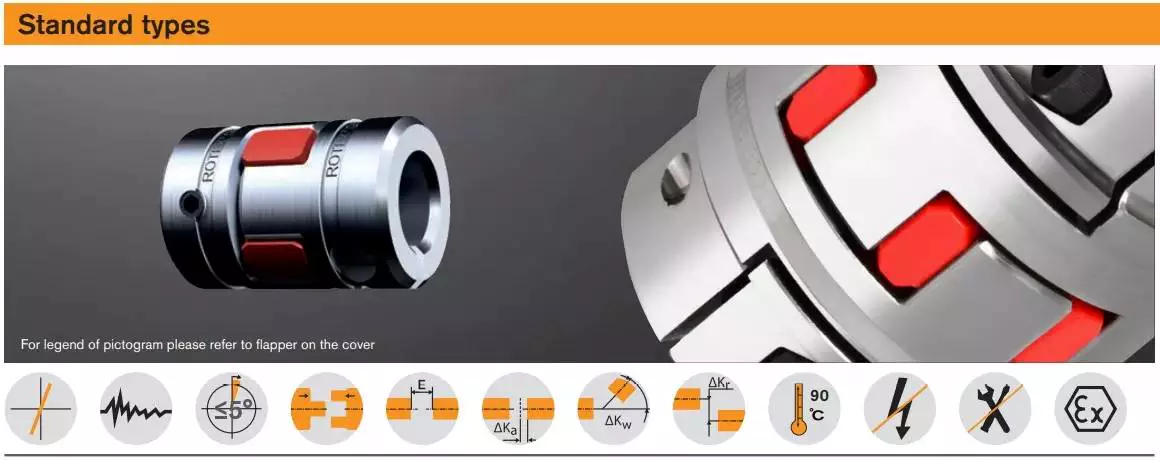
Modifications
The aim of this paper is to investigate the effects of coupling modifications. It shows that such modifications can adversely affect the performance of the coupling mechanism. Moreover, the modifications can be predicted using chemical physics methods. The results presented here are not exhaustive and further research is needed to understand the effects of such coupling modifications.
The modifications to coupling involve nonlinear structural modifications. Four examples of such modifications are presented. Each is illustrated with example applications. Then, the results are verified through experimental and simulated case studies. The proposed methods are applicable to large and complex structures. They are applicable to a variety of engineering systems, including nonlinear systems.

editor by czh 2023-01-27